01
Typically 5–7 business daysTechnical Red Flag Screen
A focused screen for material technical risks, weak evidence, unsupported claims and questions requiring deeper work.
Technical and scientific diligence for investors and acquisition teams evaluating software, AI and science-led businesses. We examine the evidence, technology, team and delivery requirements against a clearly agreed technical scope.
Scope boundary: ZeroFold provides technical and operational findings only—not financial product advice, investment or transaction recommendations, valuation, fundraising, arranging or securities dealing.
Engagement options
Begin with a focused screen, investigate the full technical scope, test one critical claim or convert existing findings into a practical first-100-day plan.
Technical Red Flag Screen
A focused screen for material technical risks, weak evidence, unsupported claims and questions requiring deeper work.
Full Technical & Scientific Due Diligence
A senior-led assessment of the technology, scientific evidence, people, defensibility, scale and execution requirements against the agreed technical scope.
Technical Claim Validation
Targeted examination of a technical or scientific claim when document review alone cannot establish whether the evidence supports it.
100-Day Technical Value Creation Plan
A sequenced plan translating findings into technical priorities, owners, dependencies, budget assumptions and practical post-close action.
What the diligence is designed to answer
01Does the technology or science work as management claims?
02Can the product, platform or technical system meet the stated operating and scale requirements?
03How strong, reproducible and technically relevant is the evidence?
04Are the team, roadmap, security and delivery capability credible?
05What must be fixed, validated or built first after close?
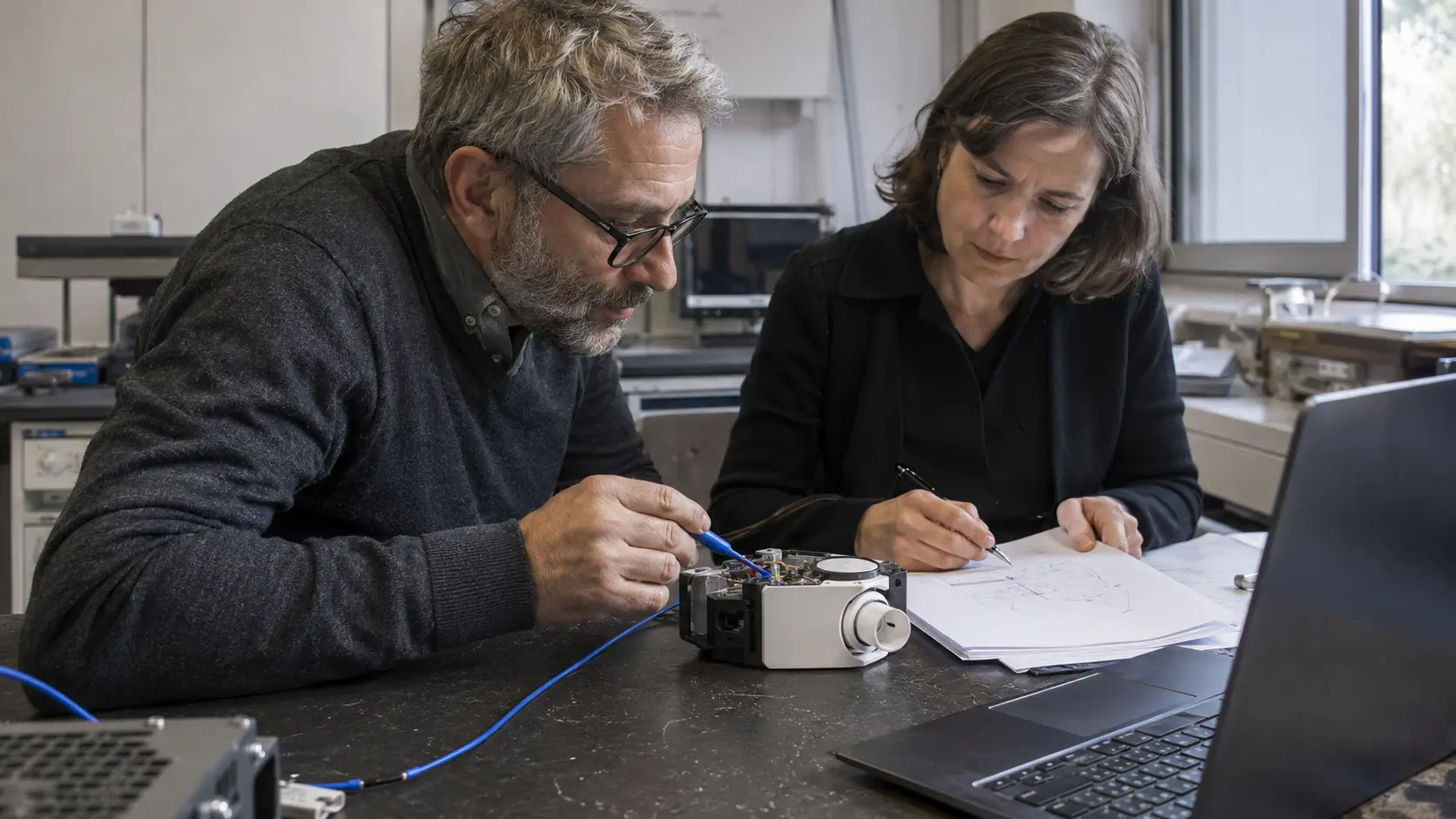
Test the technical claim, trace the evidence and connect the finding to remediation or post-close action.
Software & AI · Core focus
Assess whether the product, systems, team and AI claims can perform at the scale, cost and pace required by the stated operating case.
01Product maturity and roadmap credibility
02Architecture, codebase and technical debt
03Cloud infrastructure, reliability and scalability
04Engineering organisation and delivery capability
05Cybersecurity posture and material exposure
06AI architecture, models and data advantage
07AI evaluation quality, unit economics and failure modes
08Defensibility, replication risk and third-party dependency
Specialist coverage
Scientific and advanced-engineering disciplines are not interchangeable. Software & AI is the primary focus. Other work is accepted selectively and assembled around the target rather than presented as a permanent in-house practice in every field.
What ZeroFold assesses
Product architecture, codebase quality, technical debt, scalability, security, engineering team, delivery velocity, infrastructure, data assets, AI architecture, model dependencies, AI economics, technical moat, replication risk and whether the technology can meet the stated operating case.
Typical specialist team
Technology Diligence Lead, Senior Software Engineer or Solution Architect, Data/AI Engineer and Cybersecurity Engineer.
What ZeroFold assesses
Software and device technology, clinical evidence, product maturity, algorithm performance where relevant, interoperability, health-data architecture, cybersecurity, regulatory-pathway and quality-system readiness, manufacturing dependencies and the ability to scale into clinical use.
Typical specialist team
Technical Diligence Lead, Medtech Engineer, Clinician or Clinical Specialist, Regulatory Specialist, Data/AI Engineer and Cybersecurity Specialist as required.
What ZeroFold assesses
Core technical claims, technology readiness, performance and efficiency, engineering feasibility, scalability, technically driven unit economics, manufacturing requirements, supply-chain dependencies, deployment constraints, technical moat and risks to commercial scale-up.
Typical specialist team
Relevant Scientist or Engineer, Energy or Process Engineer, Manufacturing Specialist and Technical Diligence Lead. The disciplines depend heavily on the technology being assessed.
What ZeroFold assesses
Technology readiness, system architecture, performance claims, mission suitability, hardware and software integration, cybersecurity, reliability, testing evidence, certification dependencies, manufacturing readiness, supply-chain risks and ability to scale into operational deployment.
Typical specialist team
Aerospace or Systems Engineer, Defence Technology Specialist, Software/AI Engineer, Cybersecurity Specialist, Manufacturing Specialist and Technical Diligence Lead as required.
What ZeroFold assesses
Robotics architecture, hardware and software stack, autonomy and AI, sensors, reliability, manufacturability, production cost, supply chain, quality control, deployment requirements, technical scalability and the path from prototype to commercial production.
Typical specialist team
Robotics Engineer, Embedded-Systems or Software Engineer, AI or Computer Vision Specialist, Manufacturing Engineer and Technical Diligence Lead.
What ZeroFold assesses
Scientific mechanism, supporting research, reproducibility, preclinical and clinical evidence, development stage, trial design, regulatory-pathway dependencies, manufacturing and CMC requirements, scientific differentiation, major dependencies and probability of technical development succeeding.
Typical specialist team
Therapeutic-area Scientist, Clinician, Biostatistician, Clinical Development Specialist, Regulatory Specialist and CMC or Manufacturing Expert, led through a defined diligence workstream.
What ZeroFold assesses
Scientific validity, hardware and software architecture, benchmark claims, error rates and performance, technology maturity, scalability, engineering roadmap, dependence on unresolved scientific advances, technical differentiation and whether claimed commercial advantages are realistic.
Typical specialist team
Quantum Physicist or Researcher, Quantum Engineer, relevant Hardware or Software Specialist and Technical Diligence Lead.
The exact team is set after reviewing the technical scope, target technology, available evidence and the formal opinions required. Regulatory, clinical, legal, patent, financial and certification opinions remain with appropriately licensed or qualified advisers.
How the work is run
The work is built around the client's agreed technical questions, with visible evidence quality and clear boundaries around each specialist opinion.
Define the technical and operating assumptions to examine, the material questions to answer and the evidence boundaries for the work.
Map the documents, systems, demonstrations, interviews and specialist tests required to support or challenge those assumptions.
Appoint senior diligence leadership and the domain specialists required by the target technology. Work proceeds only when credible coverage is in place.
Examine evidence, interview key people, test critical claims and distinguish demonstrated capability from roadmap intent or management assertion.
Explain material technical risks, evidence quality, remediation priorities and the practical work required before or after close.
What the investor receives
01Executive technical findings linked to the agreed scope
02Red flags, risks, dependencies and unanswered questions
03Evidence-quality and claim-validation assessment
04Software, architecture, infrastructure and team assessment where relevant
05Specialist scientific or engineering workstream findings
06Execution implications, technology budget assumptions and technical decision points
07Prioritised 100-day technical value creation plan where commissioned
Clear scope boundaries
The work covers technology, scientific evidence, engineering capability, material technical risks, defensibility, scalability and execution feasibility within an agreed scope.
ZeroFold does not recommend whether to acquire, dispose of or hold an investment; value a financial product or business; arrange a transaction or fundraising; or deal in securities.
Investment, valuation, legal, tax and transaction conclusions remain with the client and its appropriately licensed or qualified advisers. ZeroFold's report does not approve or reject a transaction.
Formal regulatory, clinical, patent, certification, statutory audit or assurance opinions remain with appropriately qualified specialists. Any later ZeroFold implementation role is disclosed.
From diligence to value creation
Where requested, findings become a 100-day technical value creation plan with priorities, owners and dependencies. ZeroFold can then deliver defined systems through Build or coordinate complex post-acquisition execution through Investor Solutions.
Questions
No—and we do not present the capability that way. Software and AI are the core focus. For scientific and advanced-engineering targets, ZeroFold assembles an appropriately qualified specialist team around the technology and only accepts the engagement when credible senior coverage is available.
The Technical Red Flag Screen is designed for a typical five-to-seven-business-day window, subject to scope, data-room access, management availability and the target technology.
The client defines the transaction context and the technical or operating assumptions to examine. ZeroFold prioritises evidence gathering around technical materiality, uncertainty, remediation needs and post-close execution—not around a recommendation to proceed with, price or reject the transaction.
Yes. Technical Claim Validation is a focused engagement for a claim that warrants deeper testing than a general document review. The method depends on the claim, available evidence and the specialist authority required.
Yes. A 100-Day Technical Value Creation Plan can translate findings into owned action. ZeroFold Build can deliver defined technology outcomes, and Investor Solutions can lead cross-business integration or portfolio technology programmes.
Technical & Scientific Due Diligence
Share the target technology, agreed technical questions, transaction stage, available evidence and timing. We will determine the smallest credible technical scope and whether the right senior team can be assembled.